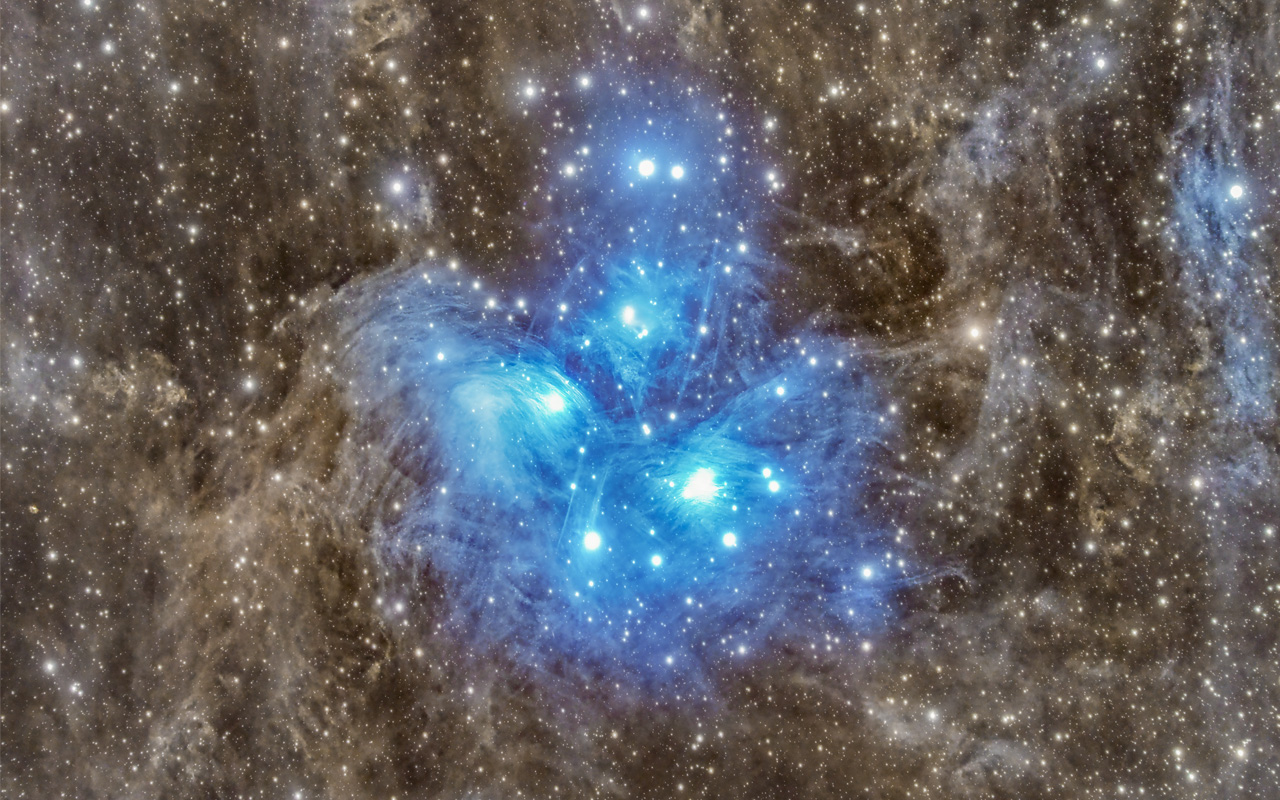
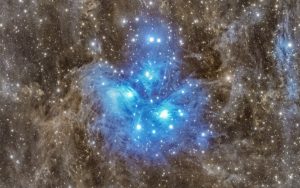
This image of M45, the Pleiades, was photographed by Stanley Tang, Starhunter Astromaster™. Created from imaging data collected across Malaysia, Indonesia, and China, the final image combines a total integration time of 22 hours.




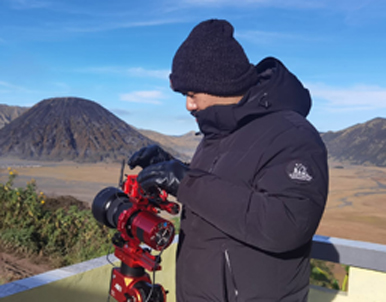
Starhunter Astrophotographer — Stanley Tang
Messier 45 The Pleiades — Seven Sisters
Object Type: Open Cluster
Look up at the night sky, and you may notice a small group of stars shining together in the constellation Taurus.
This beautiful star cluster is known as the Pleiades, or Messier 45 — one of the most famous and easily recognizable star clusters in the night sky.To many cultures around the world, it is known as the Seven Sisters.
A Nearby Stellar Family
The Pleiades is an open star cluster, located about 444 light-years from Earth.
That means the light we see tonight began its journey toward Earth more than four centuries ago.The cluster is relatively young, at around 100 million years old.Compared with our Sun, which is about 4.6 billion years old, the stars of the Pleiades are still remarkably young.More than 1,000 stars are thought to belong to this stellar family, although only a handful are easily visible to the naked eye.
So why are they called the Seven Sisters?
The brightest stars form a distinctive pattern that has fascinated people for thousands of years.
Under a dark sky, many observers can see six or seven stars without optical aid.Some people can see even more.With binoculars or a telescope, however, the Pleiades suddenly comes alive — revealing dozens, then hundreds of stars scattered across the cluster.The exact number you can see depends on your eyesight, the darkness of the sky, and the observing conditions.
The Blue Glow
But the Pleiades has another secret. Around the bright blue stars is a delicate cloud of cosmic dust.
This is a reflection nebula.Unlike an emission nebula, the dust does not produce its own visible light. Instead, it reflects and scatters the blue light from the young, hot stars of the cluster.Through long-exposure astrophotography, this extremely faint structure becomes visible — revealing beautiful blue clouds that are almost impossible to see with the naked eye.
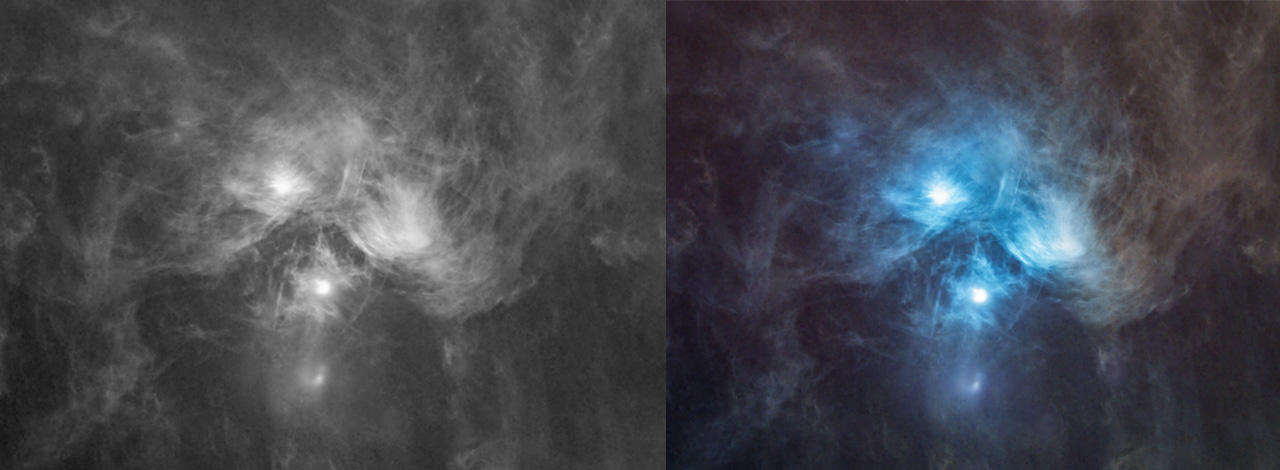
The Pleiades is surrounded by vast clouds of interstellar dust. These delicate dust clouds are illuminated by the intense blue light of the young, hot stars within the cluster, creating the beautiful blue reflection nebula captured in astrophotography.This is one of the reasons the Pleiades is such a spectacular astrophotography target.
How to Find the Pleiades
So, how can you find it in the night sky?
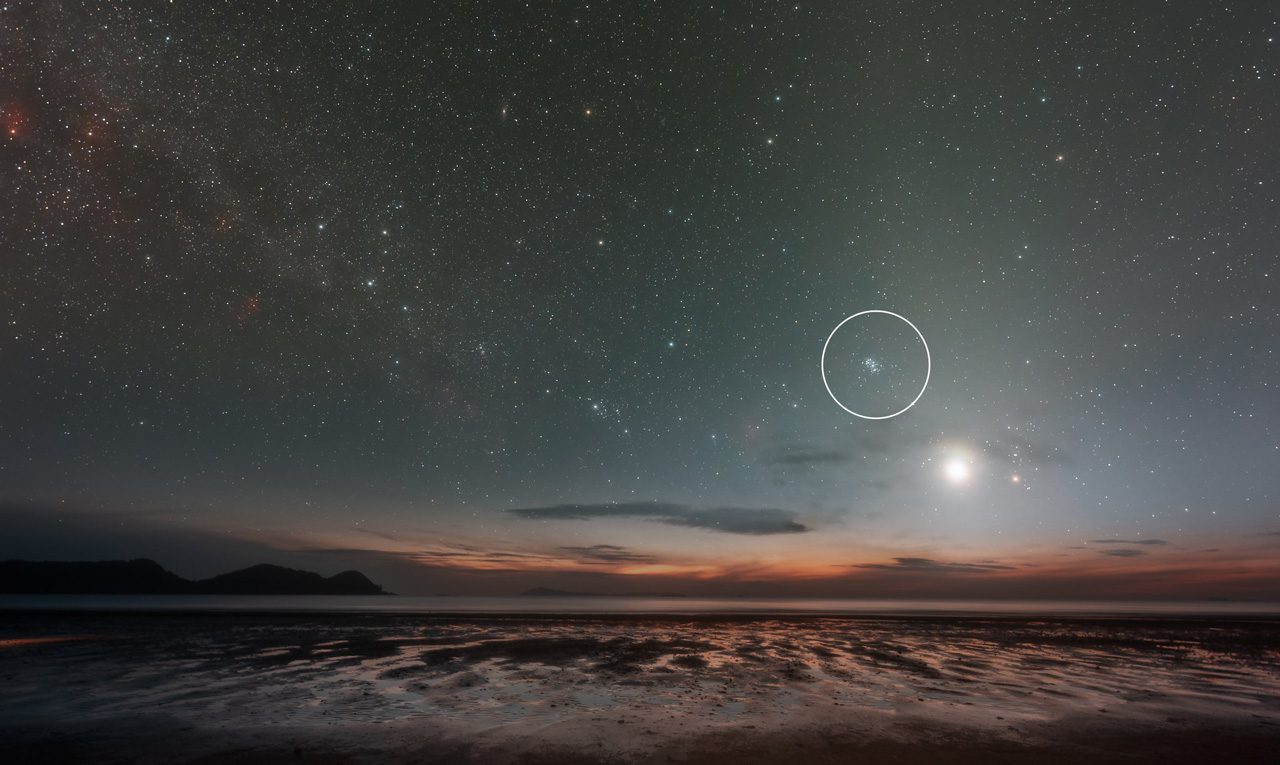
Look toward the constellation Taurus.A useful guide is Aldebaran, the bright orange star that forms the eye of Taurus.From there, look toward the nearby compact group of stars.The Pleiades appears like a tiny, misty cluster — almost like a miniature dipper in the sky. It can be seen from much of the world, making it one of the most accessible deep-sky objects for beginners.
The Pleiades is more than just seven stars.
It is a young family of stars, surrounded by ancient cosmic dust, travelling together through our galaxy.
What appears to our eyes as a small group of stars is, in reality, a vast stellar system hundreds of light-years away.
And when we photograph it, we are not simply capturing stars.
We are capturing ancient light — and revealing a universe hidden beyond our eyes.
The Pleiades — Messier 45.
The Seven Sisters.
A beautiful family of stars in the night sky.
Object Fact Sheet — Messier 45 The Pleiades
Common Name: The Pleiades
Object Type: Open Cluster
Cataloged: Messier 45 (M45)
Other Names: Seven Sisters, Subaru
Constellation: Taurus
RA (Right Ascension): 03h 47m 24s
DEC (Declination): +24° 07′ 00″
Age: About 100 million years
Distance: About 444 light-years
Apparent Magnitude: 1.6
Angular Size: About 110 arcminutes