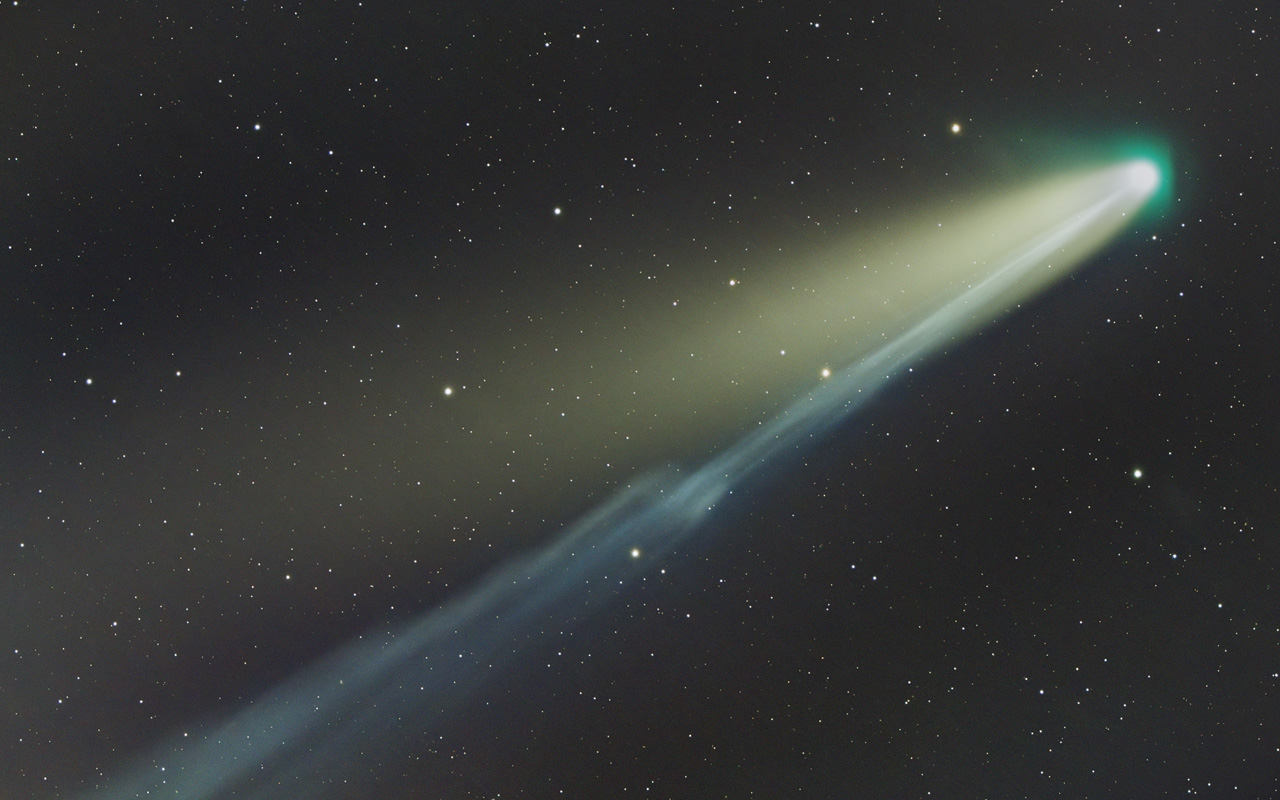
This image of Comet C/2025 A6, also known as Comet Lemmon, was captured by Stanley Tang, Starhunter Astrophotographer, under the exceptionally dark skies of the Starhunter RemoteClearSky Observatory, China.




Podcast English
Podcast 中文

Starhunter Astrophotographer — Stanley Tang
Using an Askar 600 telescope, ZWO AM5N mount, and ZWO ASI2600MC Pro camera, Stanley collected 1.2 hours of imaging data with an Antlia LRGB + O III filter combination.The image reveals the comet’s delicate coma and extended tail, capturing the subtle structure of gas and dust surrounding this visitor from the outer Solar System as it travels through the night sky.
Comet C/2025 A6 (Lemmon)
Object Type: Non-Periodic Comet
This is Comet C/2025 A6, also known as Comet Lemmon.It was discovered by the Mount Lemmon Survey in images taken on 3 January 2025. Unlike a short-period comet, Lemmon follows a long-period, retrograde orbit. Before its 2025 passage, it had been travelling inward for roughly 1,350 years. Its closest approach to the Sun was approximately 0.53 astronomical units, or about 79 million kilometres.
As Lemmon approached the Sun, increasing solar heat caused its surface ices to sublimate — changing directly from solid ice into gas.This released trapped gas and dust around the nucleus, forming a large, diffuse coma.On 12 August 2025, the coma was already about one arcminute across, with an apparent magnitude around 13.9.By 19 August, when the comet was about 1.7 astronomical units from the Sun, its total magnitude had brightened to around 11. At that stage, however, no obvious tail was yet visible.
What exactly is a Comet?
A comet is a small Solar System body made of ice, dust, rock and frozen gases, orbiting the Sun.Comets are sometimes called “dirty snowballs” because they contain material left over from the formation of our Solar System billions of years ago.When a comet travels into the inner Solar System, sunlight heats its icy surface, releasing gas and dust and creating the beautiful coma and tail we see from Earth.
The Green Coma
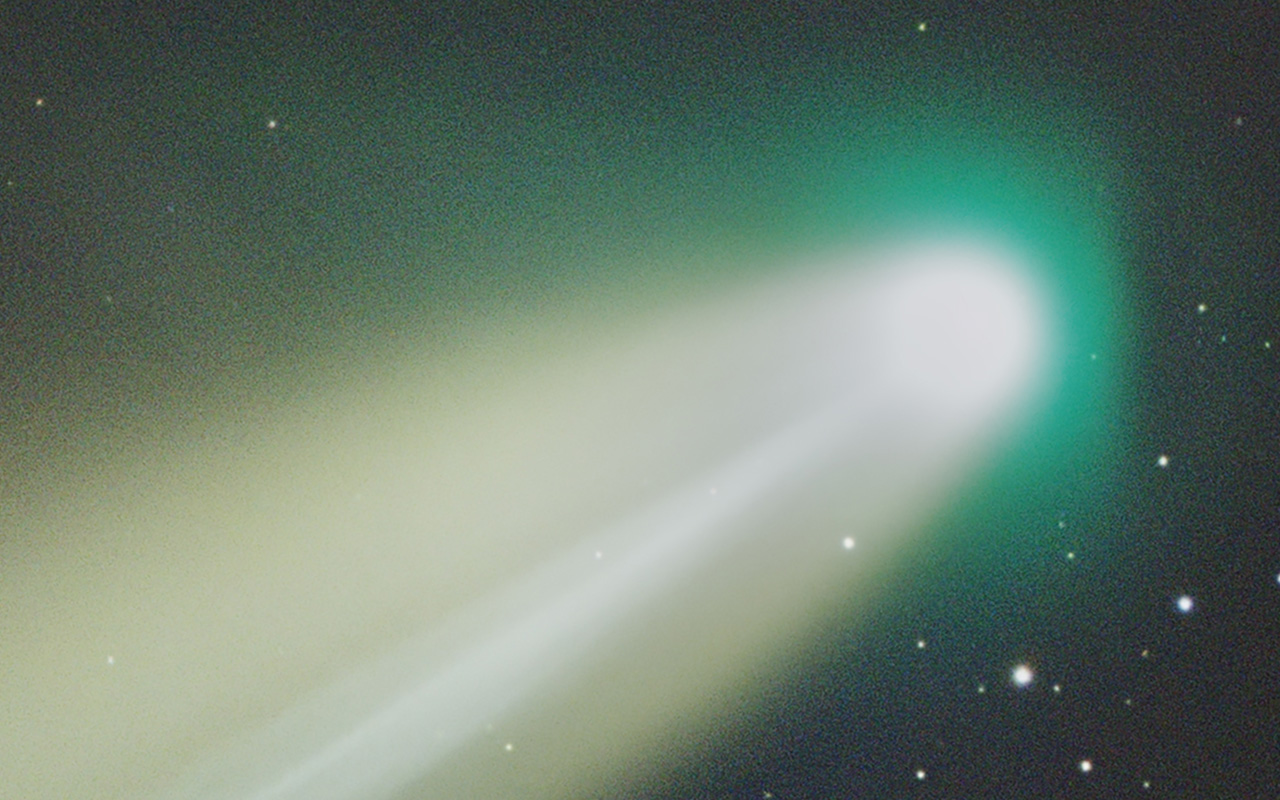
One of the most beautiful features of Lemmon is its greenish coma.The green glow comes largely from diatomic carbon, or C₂.
When sunlight reaches the comet, ultraviolet radiation breaks down carbon-rich molecules and produces these unstable carbon molecules.
The sunlight then excites the C₂ molecules, causing them to emit their characteristic green light. This creates the spectacular emerald-green appearance often seen around the comet’s head. But there is something fascinating about this colour. The tail itself is usually not green.
Dust Tail
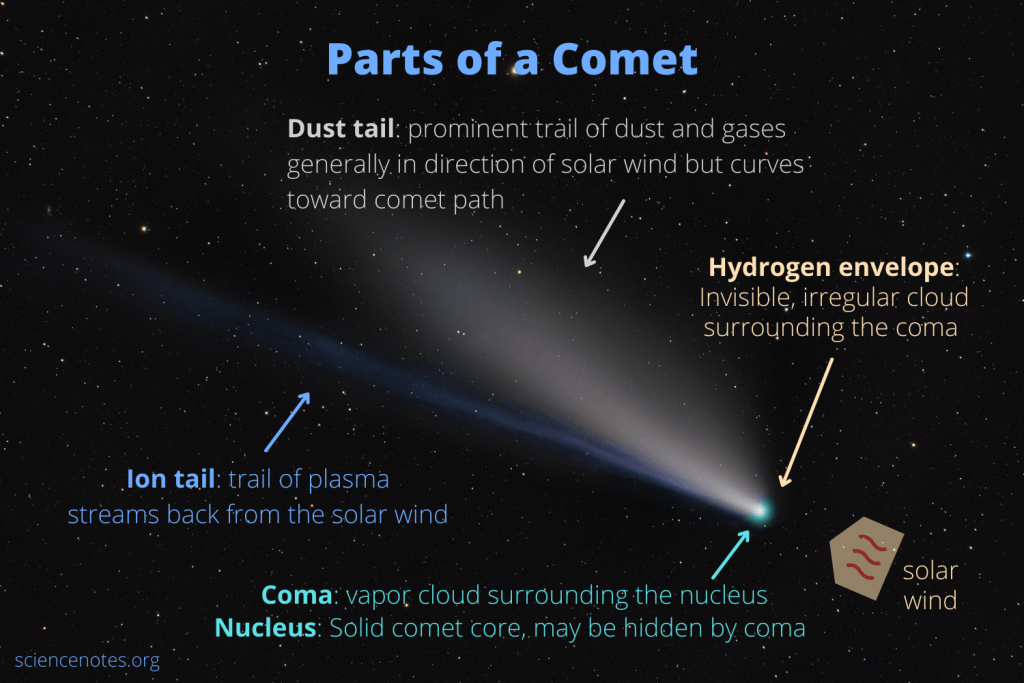
The reason is that the unstable C₂ molecules are rapidly destroyed by sunlight as they move away from the coma.The green glow therefore fades before it can extend far into the tail. Instead, we usually see two different types of tails. The ion tail is made of electrically charged gas. It is pushed strongly by the fast solar wind, creating a narrow, almost straight tail pointing directly away from the Sun. It often appears blue, particularly from emissions associated with carbon monoxide. Then there is the dust tail.
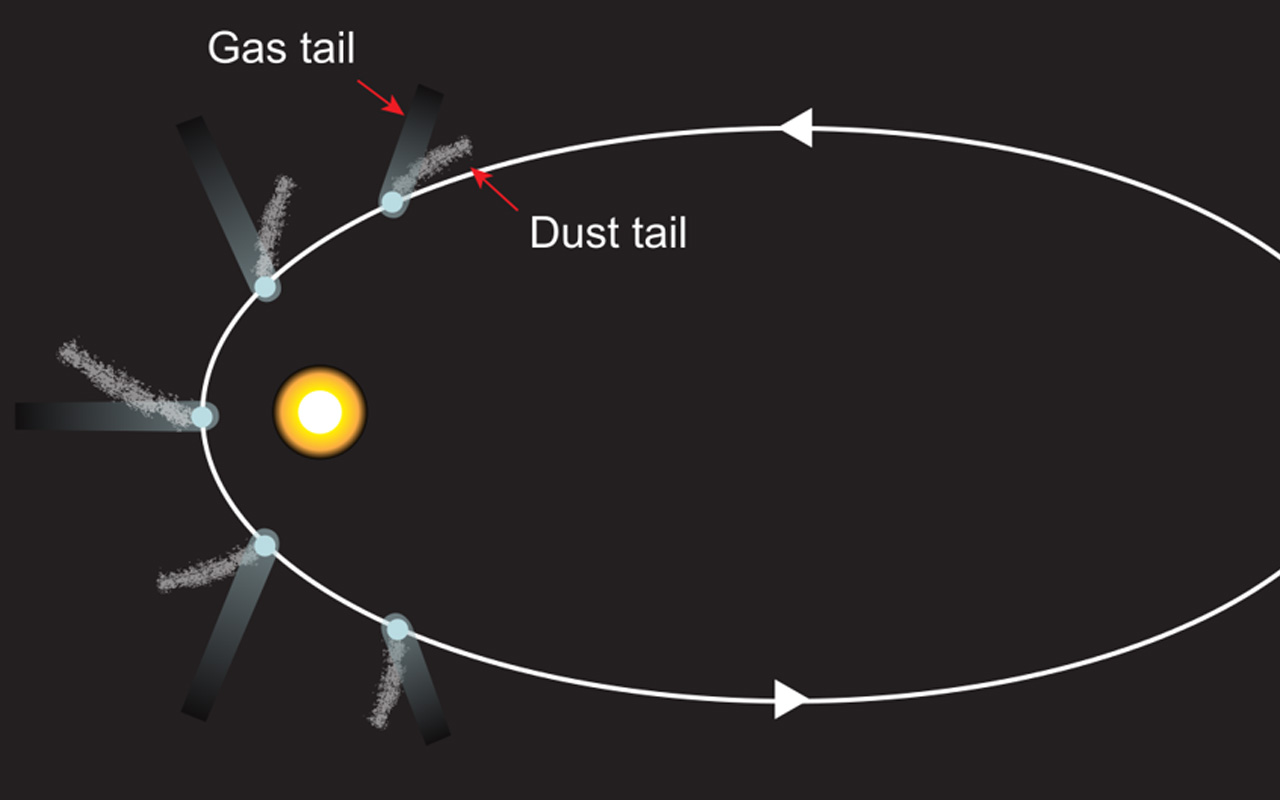
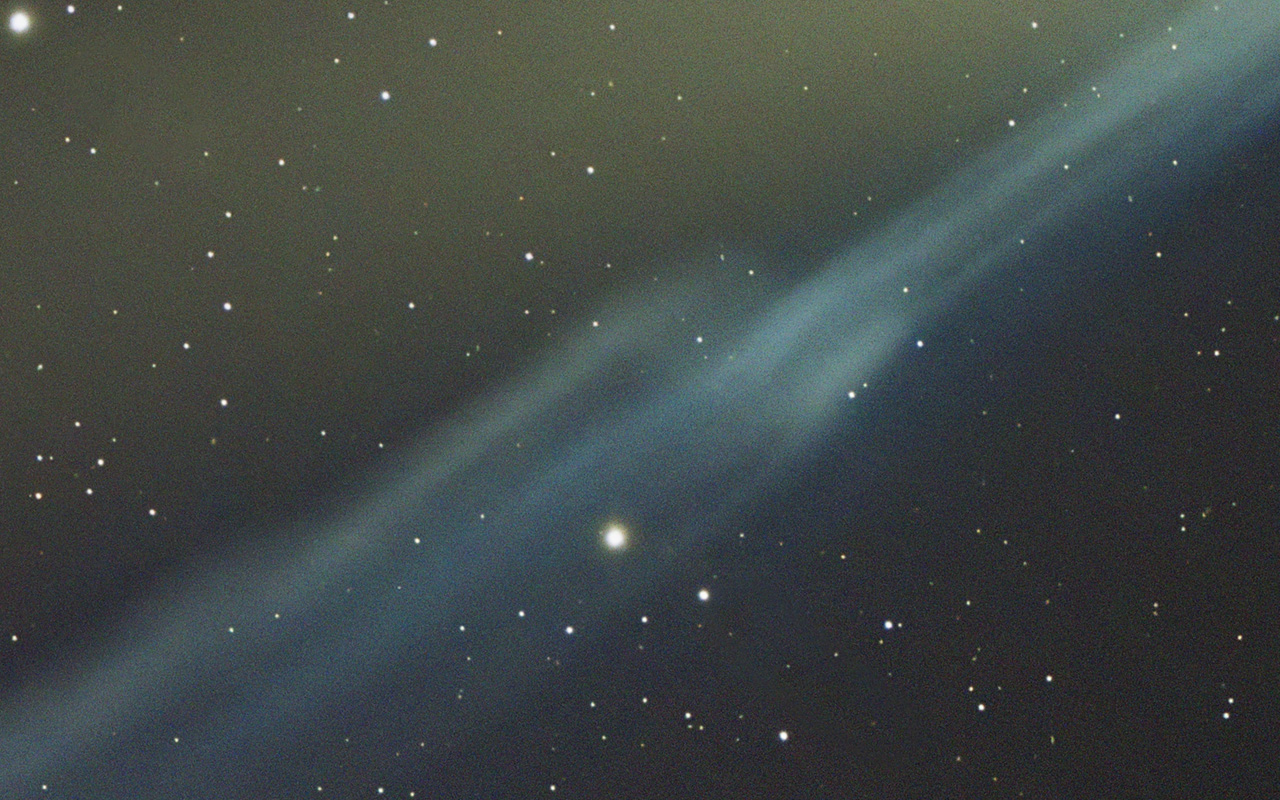
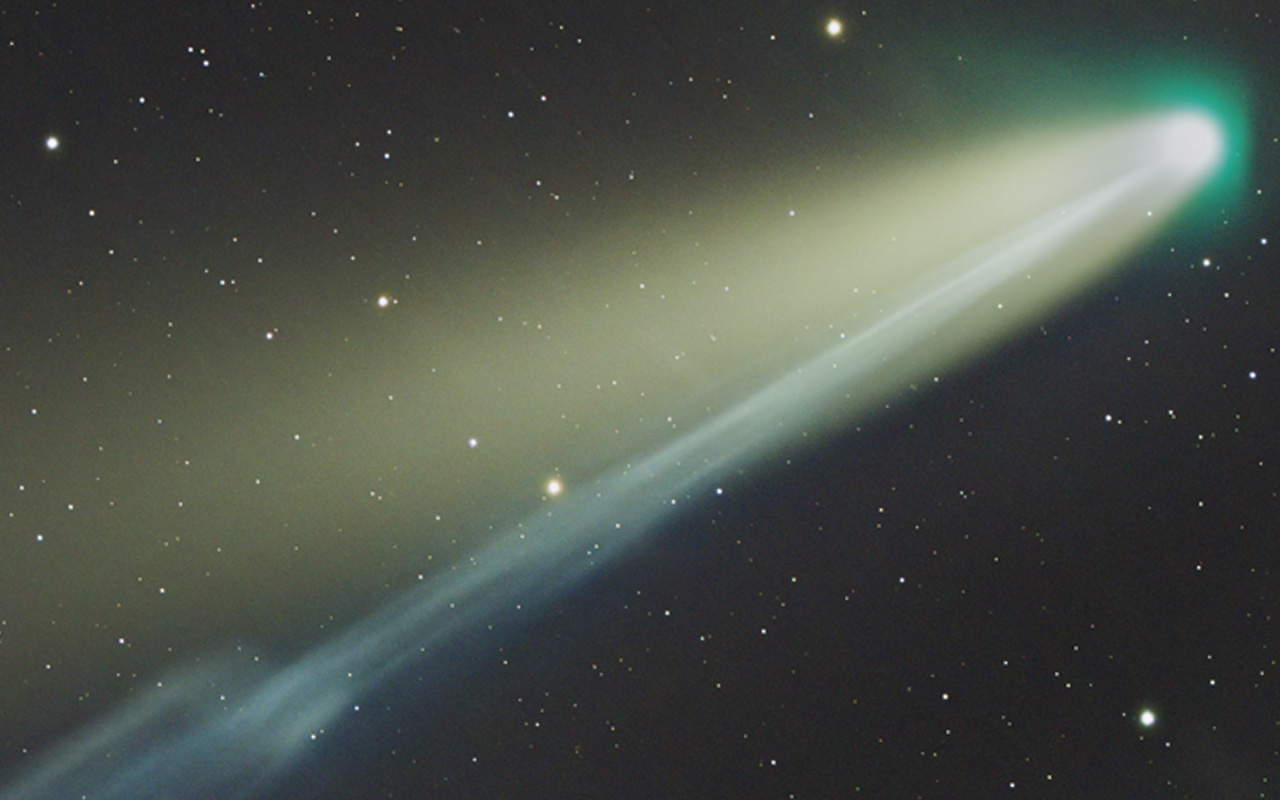
The dust tail is made of tiny particles of rock and dust released from the comet.These particles are pushed away more gently by solar radiation pressure.As a result, the dust tail usually appears whitish or yellowish, because it reflects sunlight.Unlike the ion tail, it often forms a broader, curved trail that follows the comet’s path. So when we photograph a comet, we are actually recording several different physical processes happening at the same time.
Comet Lemmon is more than a beautiful visitor in the night sky.
It is a frozen piece of Solar System history, travelling through space for centuries before returning to the inner Solar System. As sunlight transforms its ice into gas, it creates a glowing coma, a green signature, and delicate tails shaped by the solar wind and sunlight.From a tiny icy nucleus to a spectacular structure millions of kilometres across —
a comet is a living laboratory of our Solar System.
And through astrophotography, we capture its journey —
one photon at a time.
Starhunter — Capturing the Invisible Universe.
Object Fact Sheet — Comet C/2025 A6 (Lemmon)
Common Name: Comet Lemmon
Object Type: Non-Periodic Comet / Long-Period Comet
Cataloged: C/2025 A6
Other Names: C/2025 A6 (Lemmon)
Constellation: Varies with date
RA (Right Ascension): Varies with date
DEC (Declination): Varies with date
Age: Primordial Solar System material, ~4.6 billion years
Distance: Varies with date; closest approach to Sun ~0.53 AU (79 million km)
Apparent Magnitude: ~5–6 at peak brightness in October 2025
Angular Size: Varies with date; coma reached ~1 arcminute in August 2025