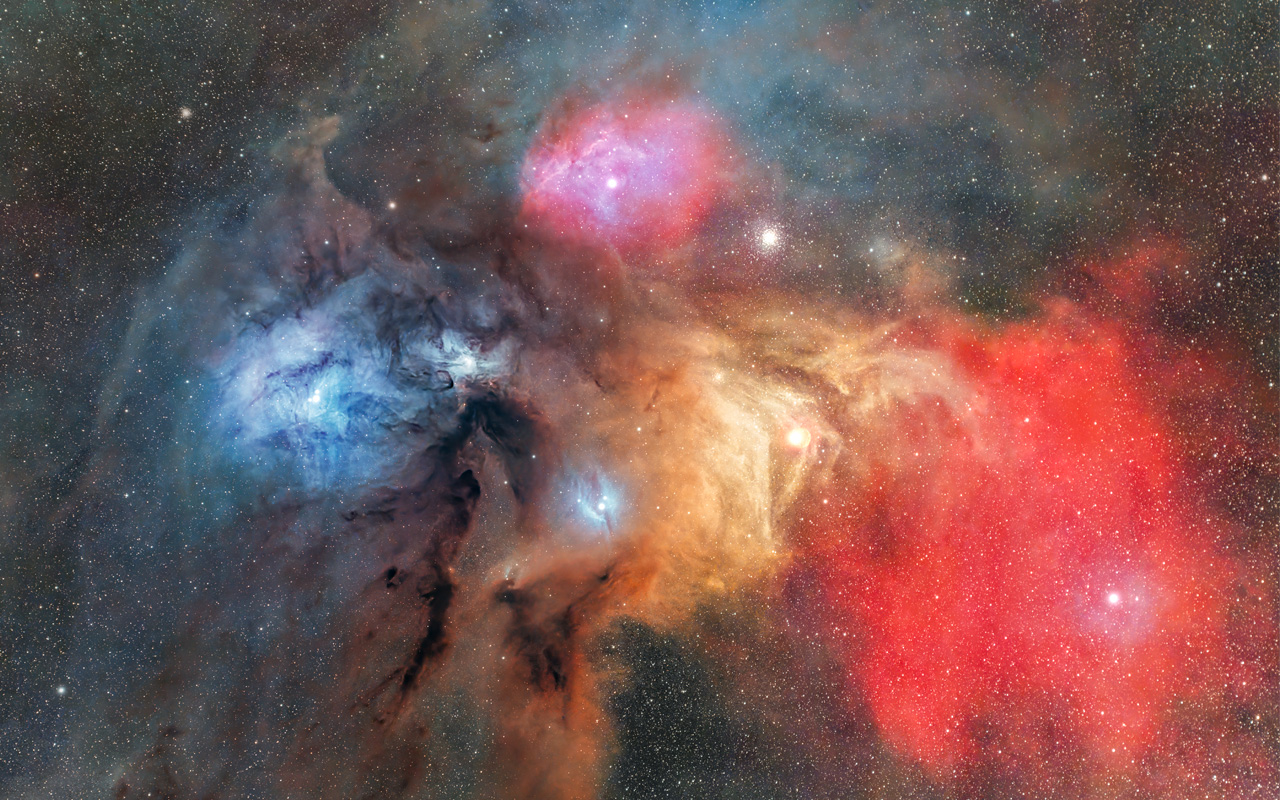
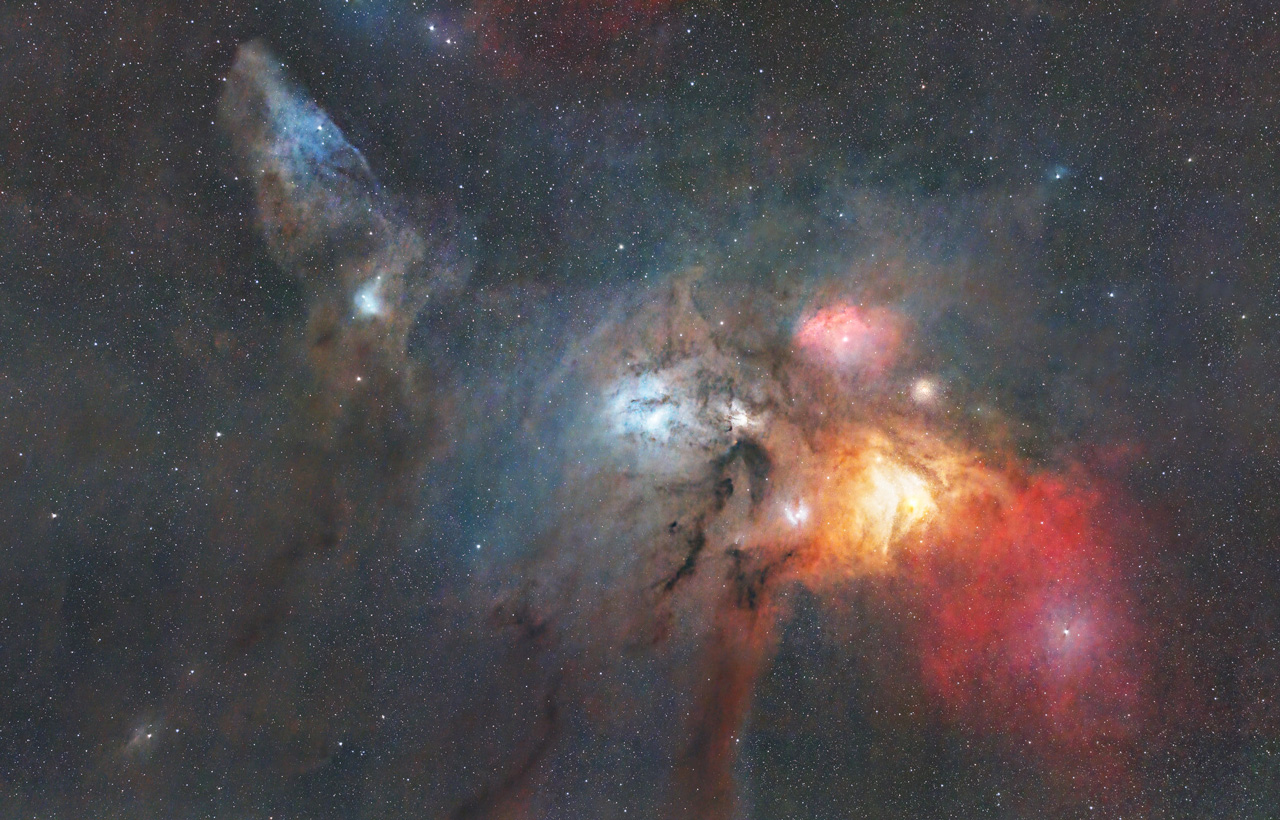
This image of the Rho Ophiuchi Cloud Complex was photographed by Michael Fu Fui Syn, Starhunter Astrophotographer.
Captured under the dark skies of Mount Bromo, Indonesia, this image was created using a RedCat Mini 51, ZWO AM3 mount, and a DreamSky Astromodified Nikon Z7.With a total integration time of 4.3 hours, the image reveals the incredible colors, intricate dust clouds, and faint structures hidden within one of the nearest star-forming regions to our Solar System.





Starhunter Astrophotographer — Michael Fu Fui Syn
Rho Ophiuchi Cloud Complex
Object Type: Molecular Cloud Complex / Star-forming Region
Look closely at this image, and you are not simply looking at colorful clouds in space.You are looking at one of the nearest stellar nurseries to our Solar System — the Rho Ophiuchi Cloud Complex.Located about 460 light-years away, this vast region of gas and dust stretches across the constellations of Ophiuchus and Scorpius.
It is a place where stars are being born.
A Landscape of Light and Dust
The Rho Ophiuchi Cloud Complex is a spectacular combination of bright nebulae, dark nebulae, molecular clouds, and glowing regions of interstellar dust.It spans roughly 4.5 by 6.5 degrees across the night sky — an area many times wider than the apparent size of the full Moon.
At the heart of the Rho Ophiuchi Cloud Complex lies Lynds 1688, or L1688 — the largest and most active star-forming region in the complex.L1688 contains more than half of the total mass of the entire Rho Ophiuchi complex. Hidden within this dense cloud of gas and dust are hundreds of young stellar objects.
Infrared observations have revealed around 425 infrared sources in and around the region, including at least 16 identified protostars.These protostars are stars in their earliest stages of formation — dense concentrations of gas and dust that are still gathering material from their surrounding clouds.Around many of these young stars are disks of gas and dust. As these disks evolve, they may eventually form planets, moons, asteroids, and other building blocks of planetary systems.
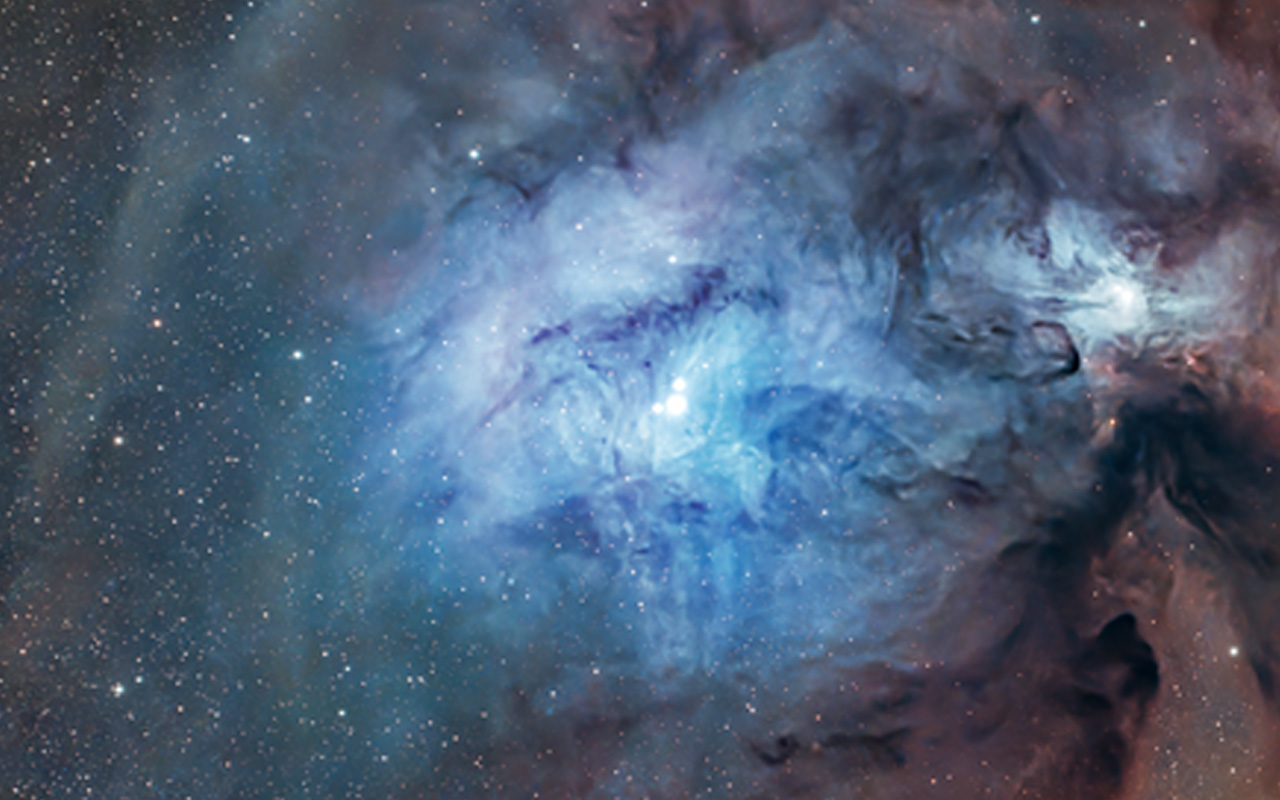
So, when we look at L1688, we are looking into a stellar nursery — a place where stars are being born today, and where the seeds of future planetary systems may already be taking shape.
Where Stars Are Born
Inside these clouds, gravity slowly pulls material together.Dense regions become increasingly compressed, forming young stellar objects known as protostars.These young stars are still gathering material from their surrounding clouds and disks.Astronomers have identified hundreds of young stellar objects in the region, including protostars and T Tauri stars.Some of these stars are only 100,000 years to one million years old.Compared with the billions of years that stars can live, they are truly cosmic newborns.And within the disks of gas and dust surrounding some of these young stars, the building blocks of future planetary systems may already be taking shape.
The Colors of Rho Ophiuchi
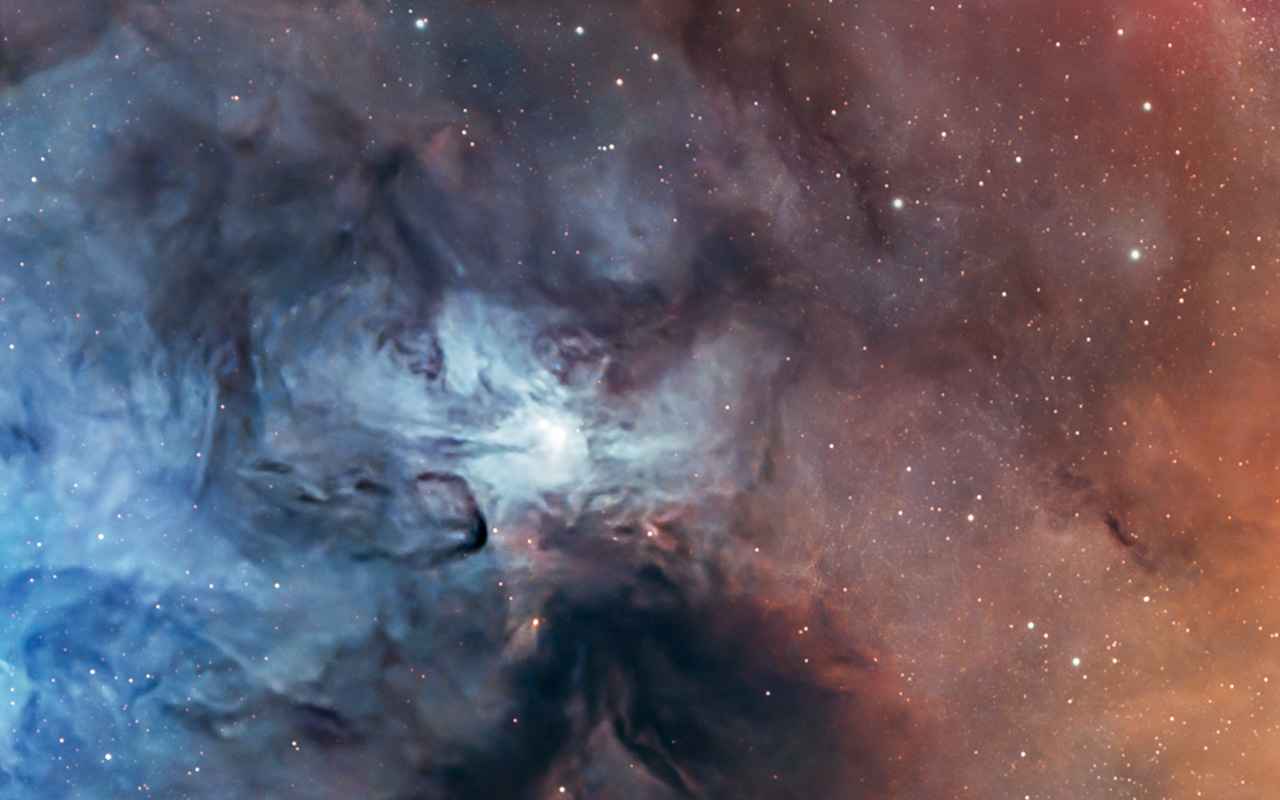
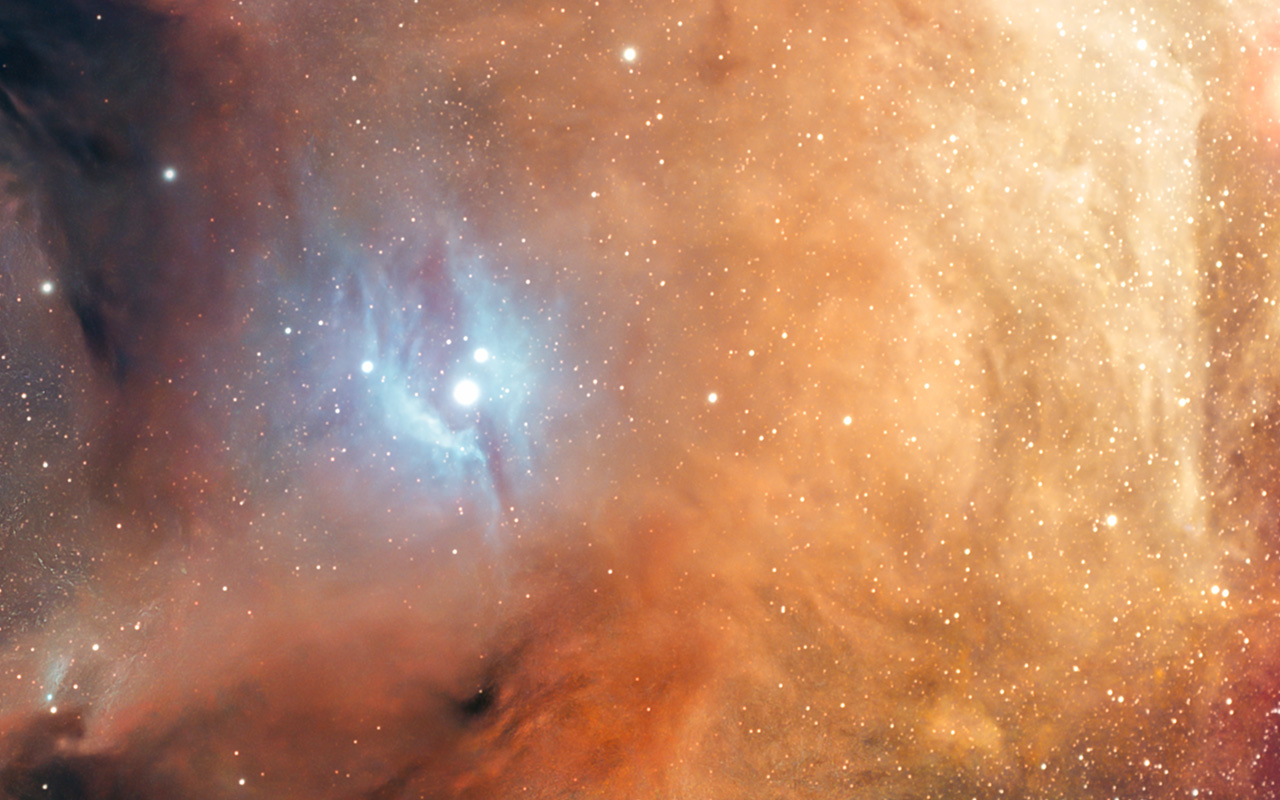
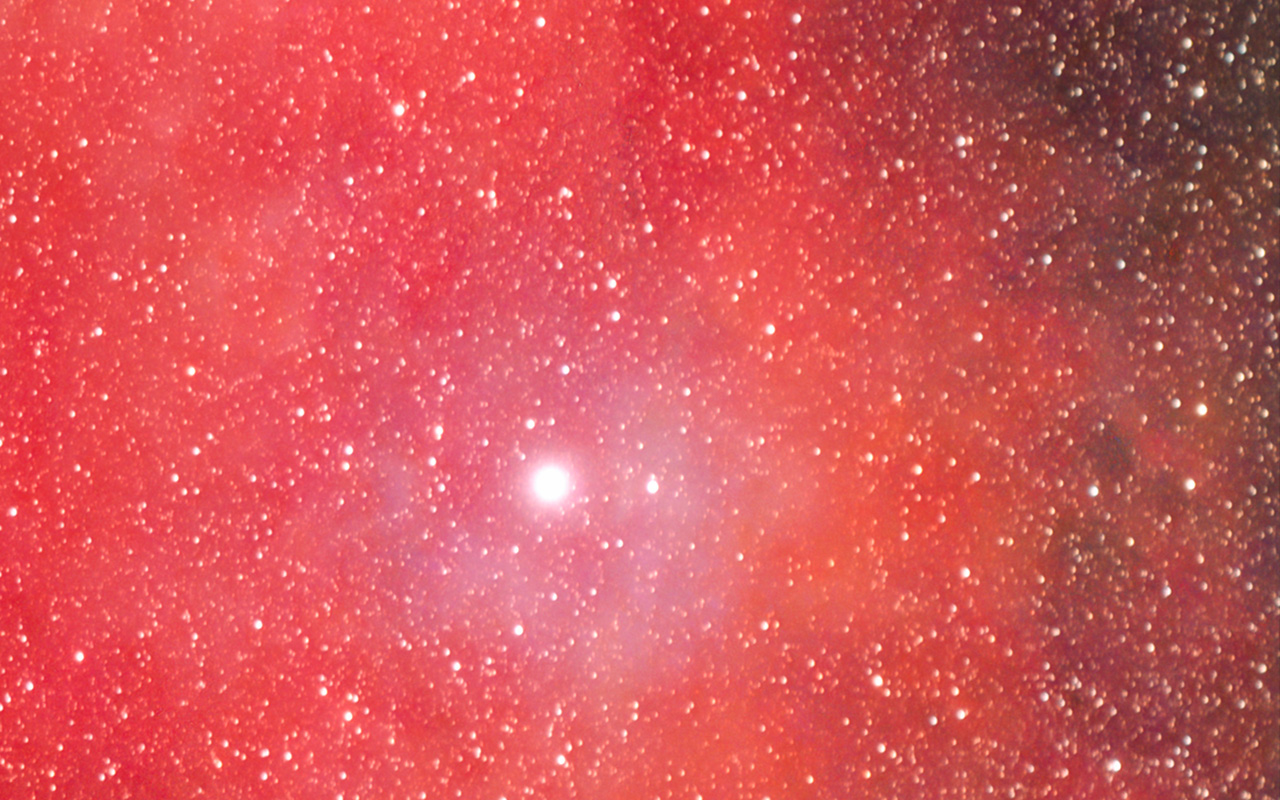
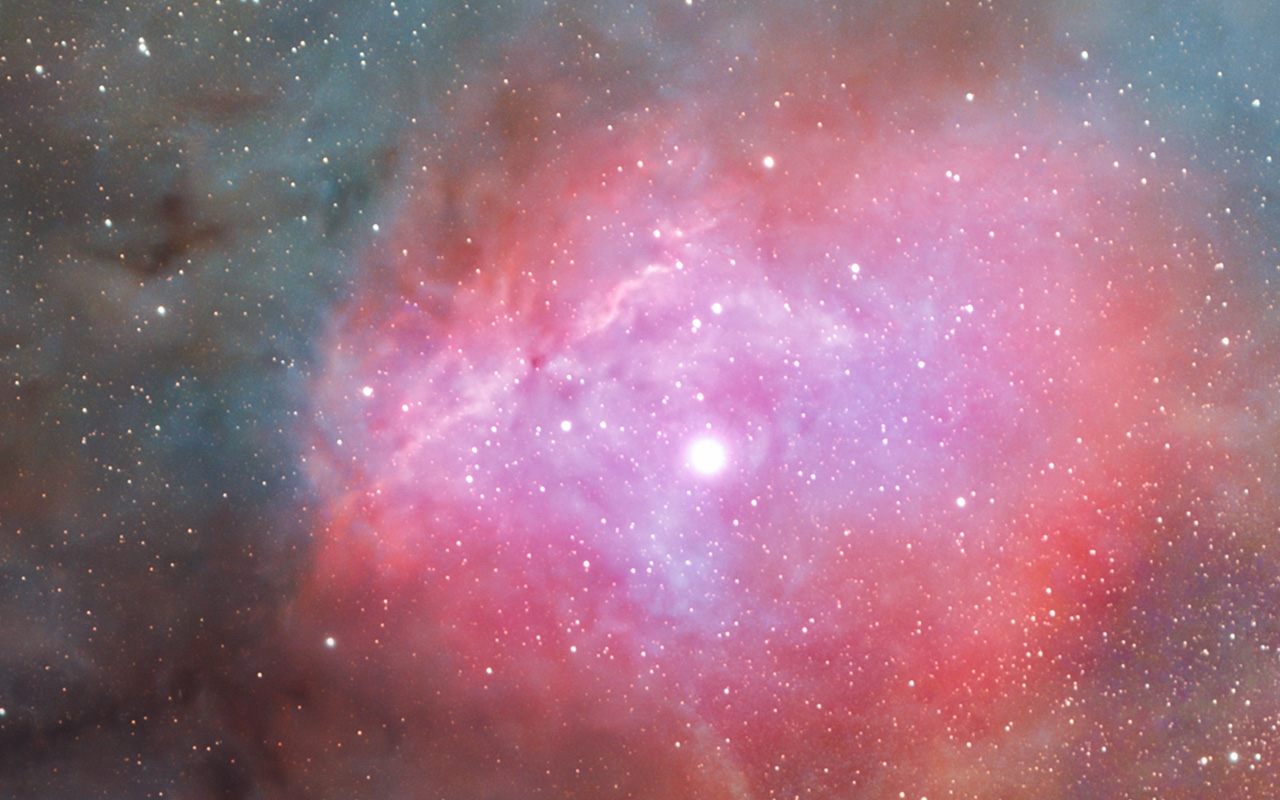
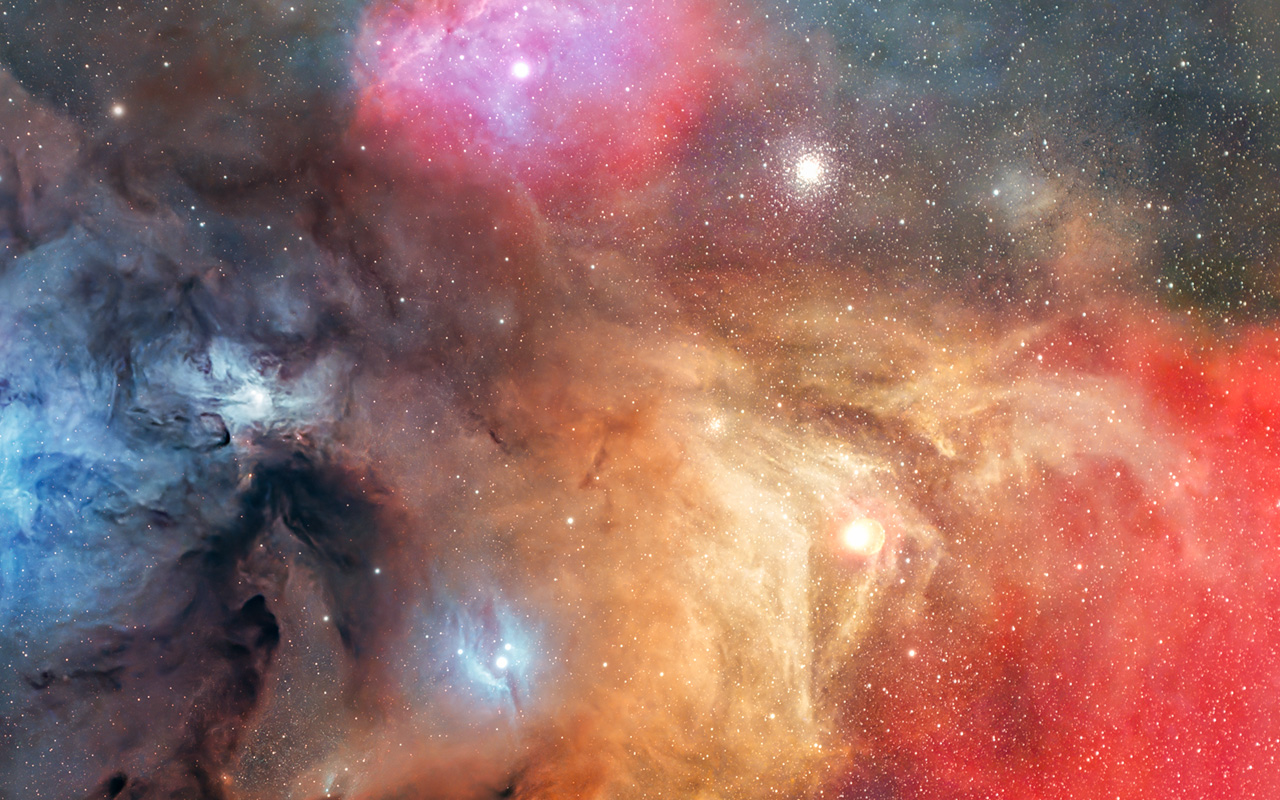
The incredible colors we see in astrophotographs come from different physical processes.The brilliant yellow and orange regions are associated with illuminated dust and reflection nebulae.The deep red emission regions reveal glowing hydrogen gas energized by nearby stars.And the dramatic dark clouds are dense concentrations of dust blocking the light from stars behind them.Together, they create one of the most visually complex regions in the night sky — a cosmic landscape where light and darkness exist side by side.
The Dark River
Look beyond the bright central region, and you can also see vast dark clouds extending across the Milky Way. Among them are Barnard 44 and Barnard 45, sometimes referred to as the Dark River.These clouds contain dense interstellar dust that blocks the light of the stars behind them.They form part of an even larger network of dark molecular clouds extending toward the Pipe Nebula and the Dark Horse region.
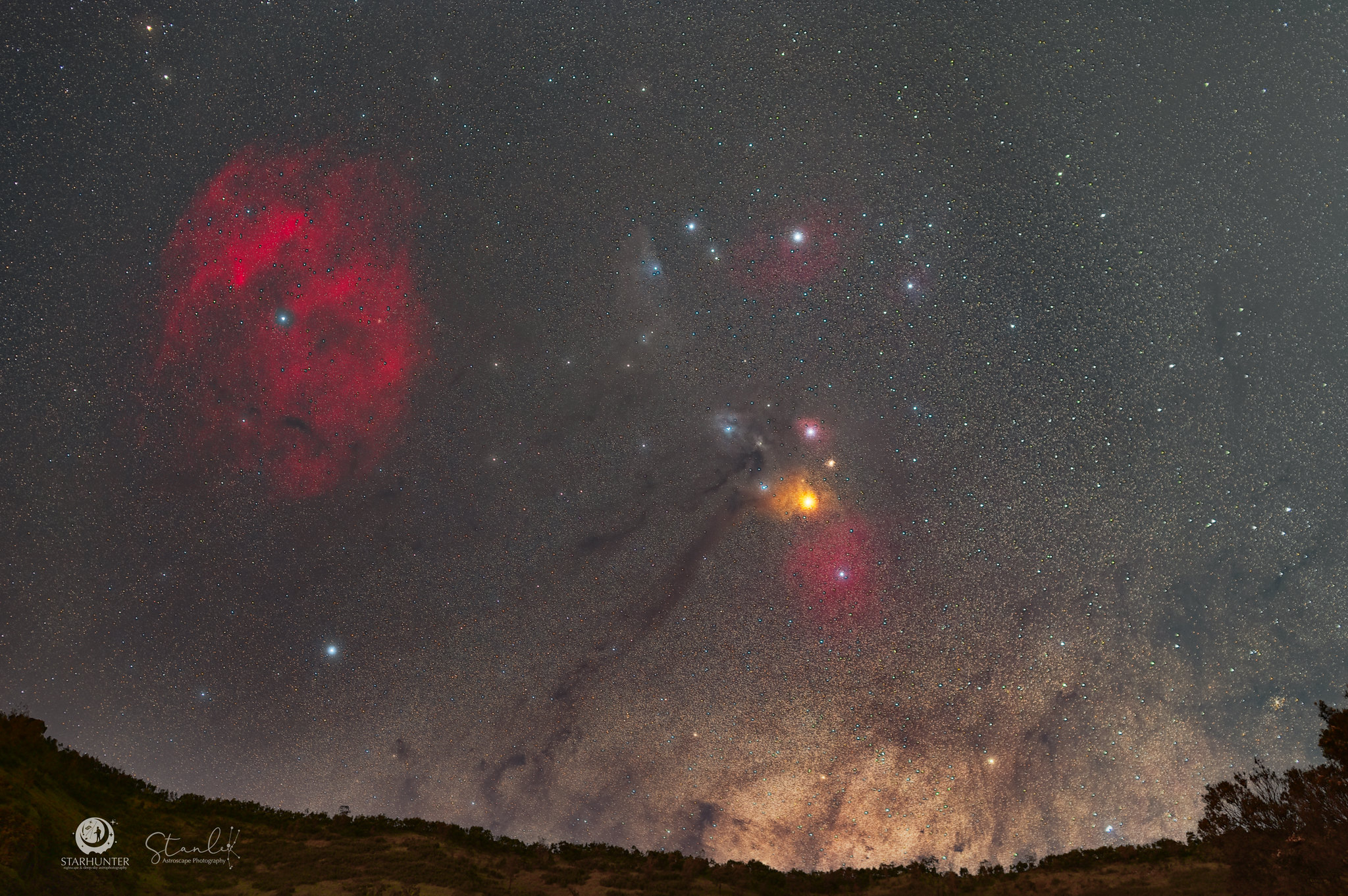
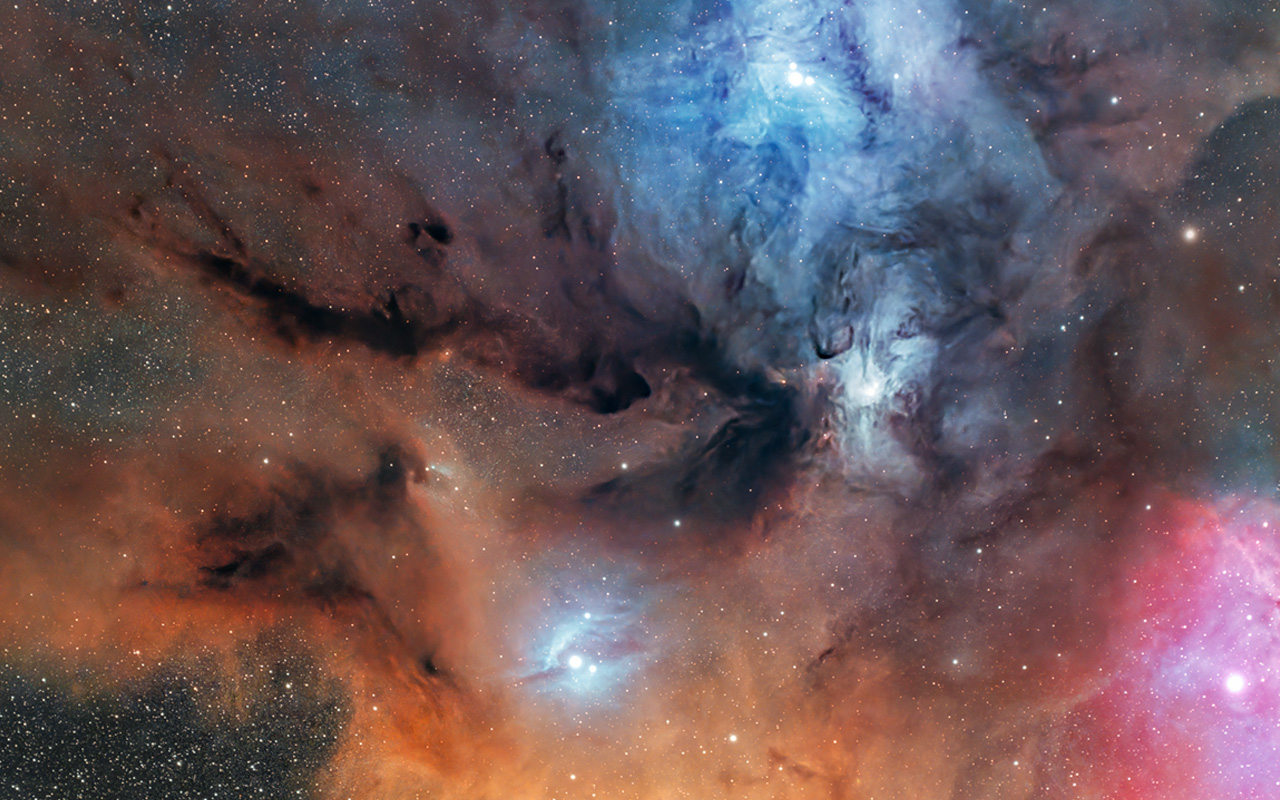
The Dark River within the Rho Ophiuchi Cloud Complex was captured by Stanley Tang using a 40mm Sigma Art lens and a DreamSky Astromodified Nikon Z6IIa.
The Rho Ophiuchi Cloud Complex is more than a beautiful astrophotography target.
It is a living laboratory of star formation — a place where clouds of gas and dust are transforming into new stars and, potentially, new planetary systems.
When we capture this region through astrophotography, we are not simply recording beautiful colors.
We are witnessing the birth of stars, 460 light-years away.
Rho Ophiuchi — where the next generation of stars is being born.
Object Fact Sheet — Rho Ophiuchi Cloud Complex
Common Name: Rho Ophiuchi Cloud Complex
Object Type: Molecular Cloud Complex / Star-forming Region
Cataloged: IC 4603, IC 4604, IC 4605, IC 4606, Barnard 42, Barnard 44, Barnard 45
Other Names: Rho Ophiuchi–Antares Region, Rho Oph Cloud
Constellation: Ophiuchus
RA (Right Ascension): 16h 27m 24s
DEC (Declination): −24° 24′ 00″
Age: A few million years
Distance: About 460 light-years
Apparent Magnitude: Not applicable
Angular Size: About 4° × 6°